Why Do Global Brand Agencies Choose Flowvisual for Fiberglass Kiosks and POSM Products for Outdoor Event Activities?
When a global brand agency plans an outdoor retail campaign, roadshow, mobile money rollout, product launch, lottery activation, beverage promotion, or temporary sales network, the challenge is rarely just finding a supplier who can “make something in fiberglass.”
The real challenge is finding a partner who understands branding, outdoor durability, product engineering, mass production, transportation, and real-world deployment at the same time.
This is one of the reasons why Flowvisual has spent the past 11 years continuously developing fiberglass retail and promotional products.
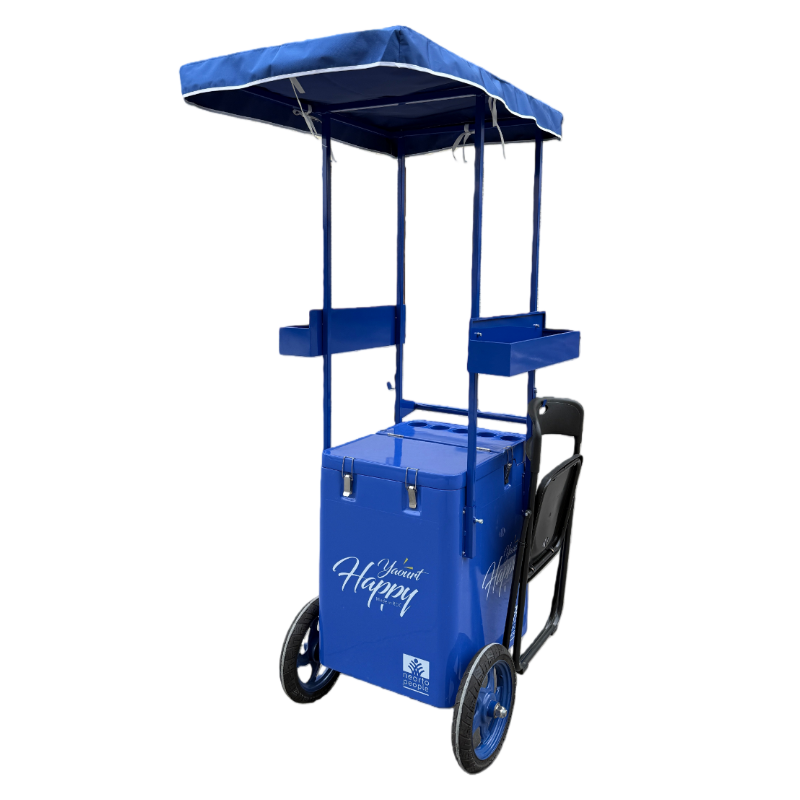
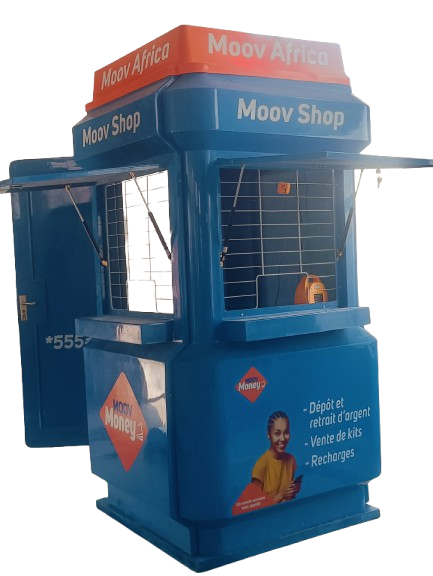
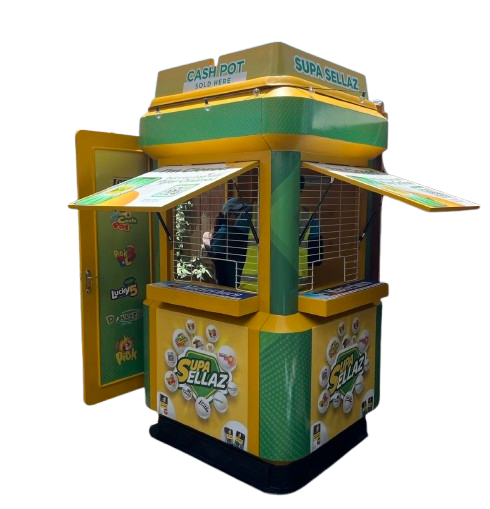
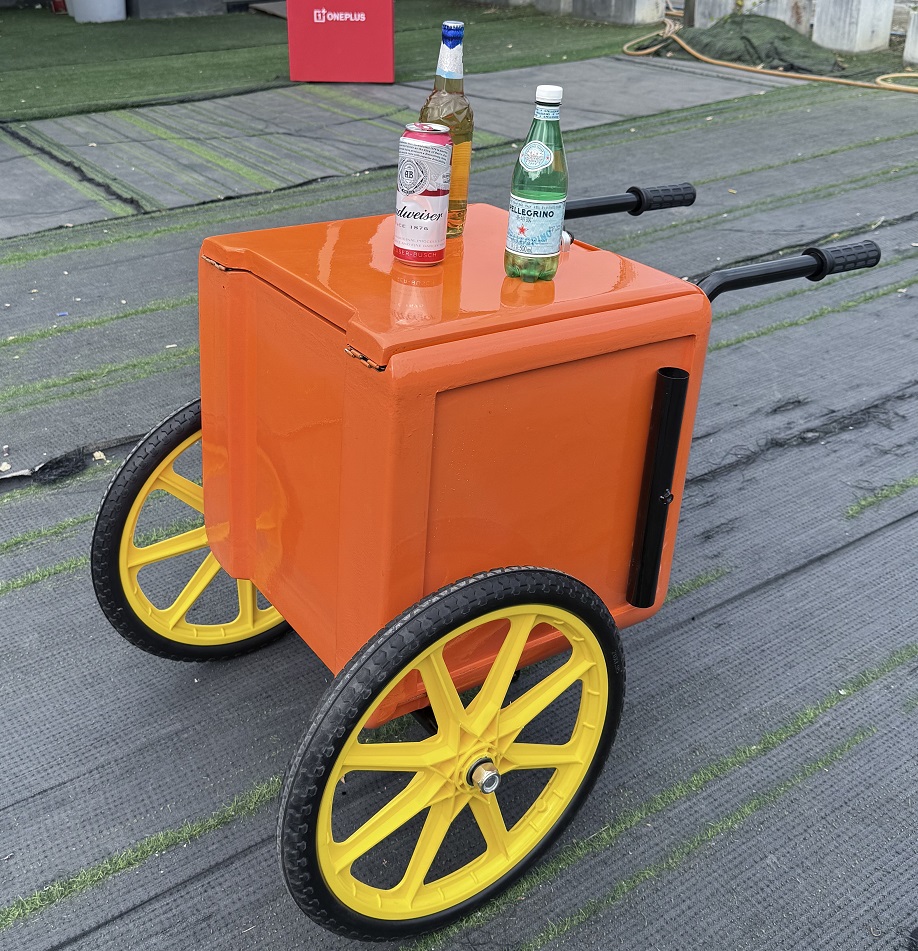
Today, our fiberglass product family includes fiberglass kiosks, insulated fiberglass carts, compression-molded promotional counters, molded street-light advertising signs, molded A-board poster stands, and many other customized POSM products.
After developing more than 30 fiberglass-related SKUs, we have gradually built something much more valuable than a collection of individual products: a flexible product platform for global brand agencies, distributors, telecom operators, mobile money companies, FMCG brands, lottery companies, beverage companies, and outdoor activation agencies.
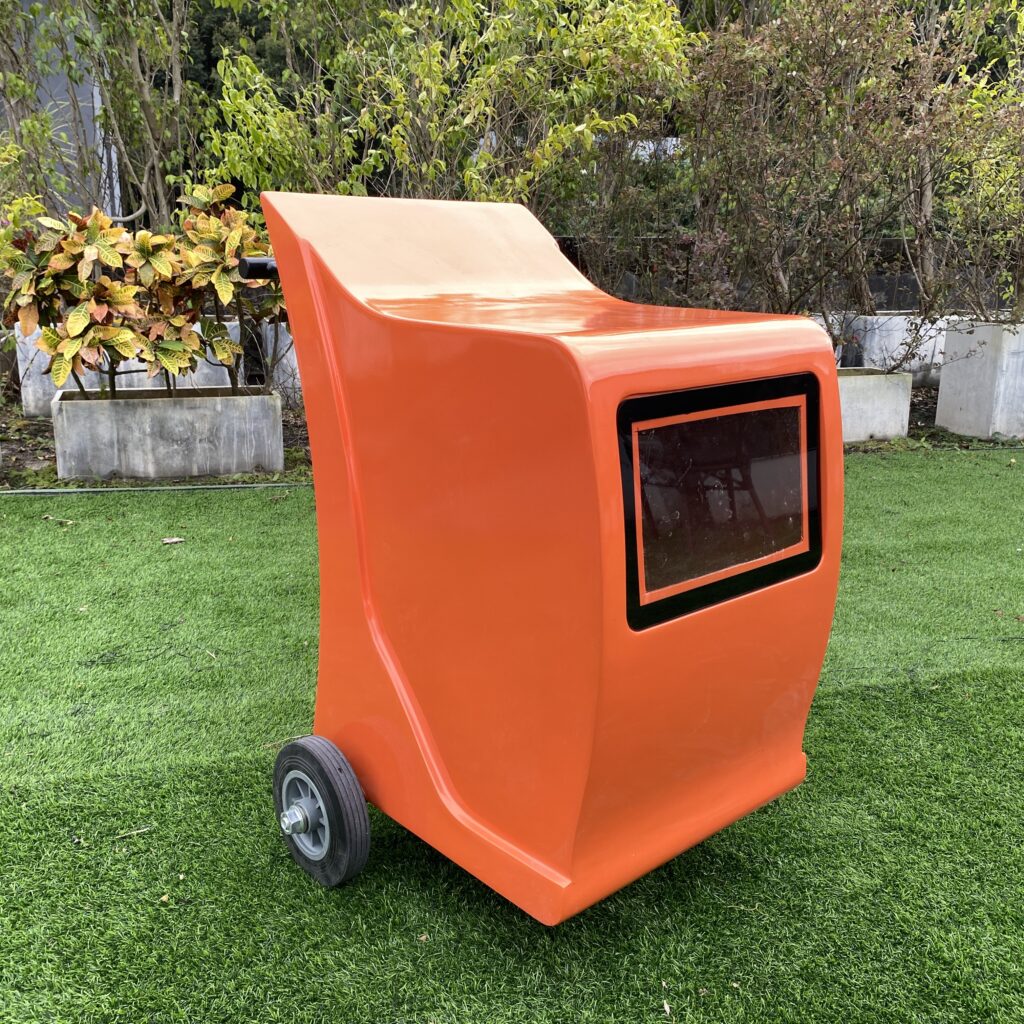
So, why do clients keep asking Flowvisual to manufacture so many fiberglass kiosks and POSM products?
There are several practical reasons.
- Fiberglass Is Naturally Suitable for Challenging Outdoor EnvironmentsOutdoor POSM has a very different job from an indoor display.Inside a shopping mall, the environment is relatively controlled. Outdoors, a kiosk, cart, advertising sign, or promotional stand may face strong sunlight, high temperatures, rain, humidity, dust, and repeated daily use.These conditions are especially important in many African markets.That is where fiberglass, or FRP — Fiber Reinforced Plastic — becomes very interesting.One of its biggest advantages is that it does not behave like ordinary untreated steel when exposed to moisture. Fiberglass itself does not rust, making it highly suitable for outdoor retail equipment in humid, rainy, coastal, or demanding environments.Moisture resistance is another major advantage.For outdoor kiosks, carts, poster stands and advertising structures, rain is not an occasional issue. It is part of the product’s normal working environment.With appropriate resin systems, pigments, surface treatment and product engineering, fiberglass products can provide excellent resistance to moisture and outdoor weathering.UV performance is equally important.A branded retail product does not only need to remain structurally functional. It also needs to continue looking like the brand it represents.If a telecom kiosk starts with a strong corporate yellow, red, orange, blue or green but quickly becomes dull under intense sunlight, the structure may still work, but the branding value has already been reduced.For projects requiring stronger outdoor color stability, Flowvisual can select suitable resin, pigment and surface systems according to the intended application and project specifications, with UV-weathering requirements considered during development.This combination of corrosion resistance, moisture resistance and outdoor color durability is one of the main reasons fiberglass is so attractive for African outdoor retail and promotional applications.
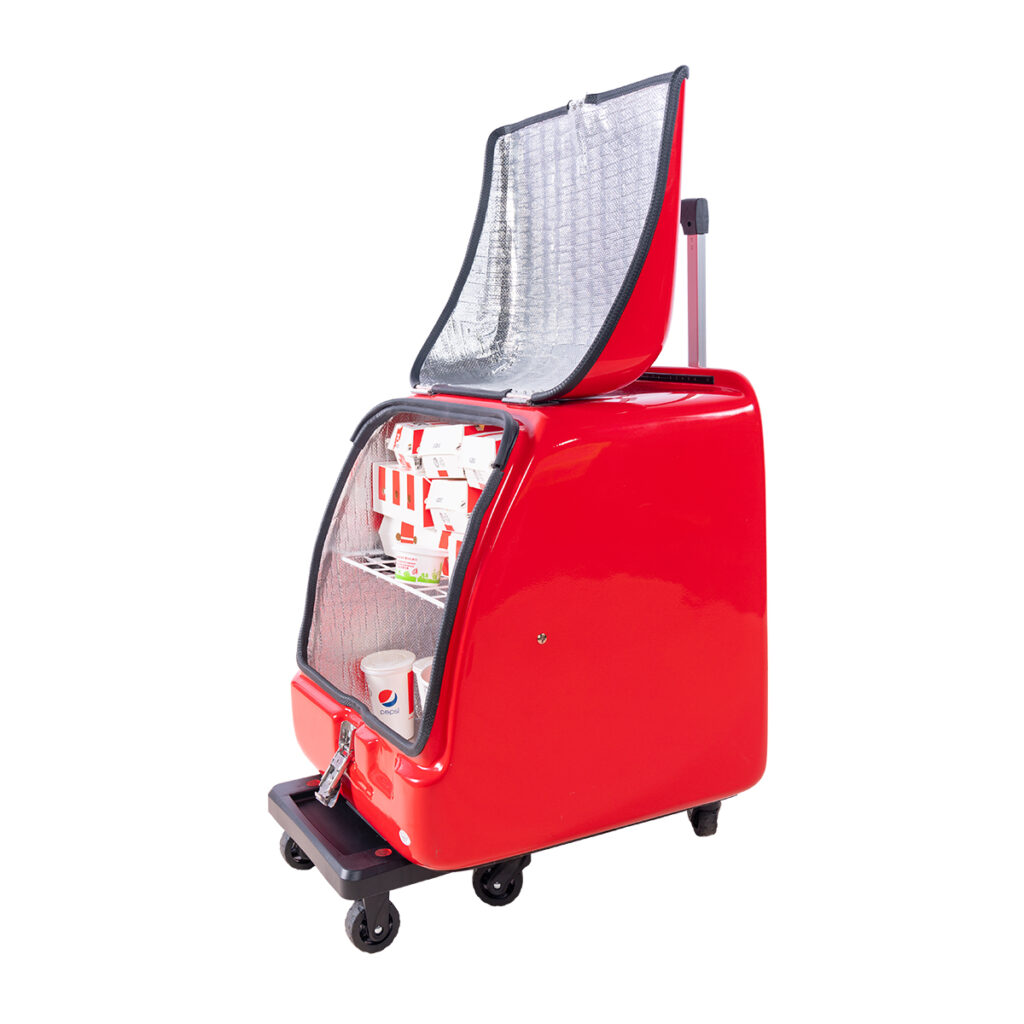
2. Fiberglass Gives Designers Much More Freedom in ShapeOutdoor retail equipment does not have to look like a metal box.This is another major reason we like working with fiberglass.Sheet metal is excellent for many products, but complex curves, rounded bodies, integrated roofs and highly distinctive shapes can become expensive or difficult to manufacture when traditional metal fabrication is used.Fiberglass changes that equation.Once a suitable mold has been developed, complex three-dimensional forms can be reproduced efficiently.A kiosk can have rounded corners.A roof can flow into the body.A promotional counter can have a sculptural shape.An A-board does not have to be a simple rectangular frame.A street-light advertising sign can become a recognizable branded object instead of just a flat panel attached to a pole.An insulated beverage cart can combine functional thermal insulation with a smooth, modern exterior.This gives global brand agencies much more creative freedom.They can develop POSM that looks more like the brand rather than forcing the brand onto a standard industrial structure.And importantly, creative shapes do not necessarily mean unrealistic mass-production costs.The initial mold requires investment, but once the product enters volume production, the same mold can reproduce the shape again and again.That makes fiberglass especially interesting for campaigns requiring dozens, hundreds, or potentially thousands of units.
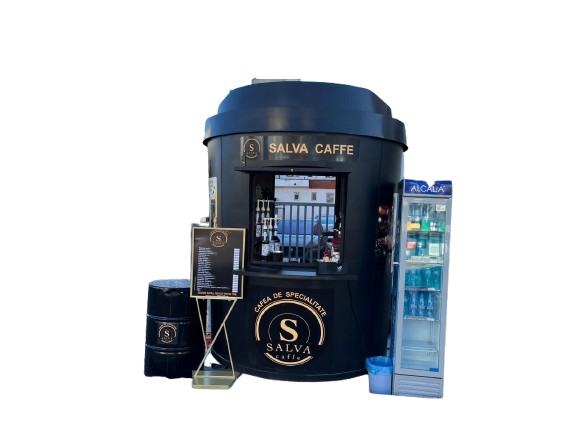
3. More Than 30 Developed SKUs Mean You May Not Need a New MoldCustom molding is powerful, but molds cost money.We understand that.That is why one of Flowvisual’s most important advantages today is not simply that we know how to manufacture fiberglass products.It is that after 11 years of continuous development, we have already created more than 30 fiberglass-related SKUs for different retail and promotional applications.This existing product library can create significant value for new customers.Instead of starting every project with:“Let’s make a completely new mold,”we can first ask:“Do we already have a mature product that can solve 80% or 90% of this requirement?”Very often, the answer is yes.Perhaps an existing kiosk body already has the right dimensions.Perhaps one of our molded promotional counters already has the right structural concept.Perhaps an existing A-board can simply be customized with a new color and graphic design.Perhaps an existing street-light advertising unit only needs a different branding panel.Perhaps a fiberglass insulated cart already meets the customer’s functional requirements and only needs brand customization.In these cases, the customer can avoid or significantly reduce new tooling investment.More importantly, they can save development time.A product that has already been manufactured before also comes with something a completely new design does not have: real production experience.We already understand the molding process.We know the difficult areas.We know how the components fit together.We know how the product can be packed.And we already have a much clearer understanding of manufacturing cost.For brand agencies working against a campaign deadline, this can be extremely valuable.
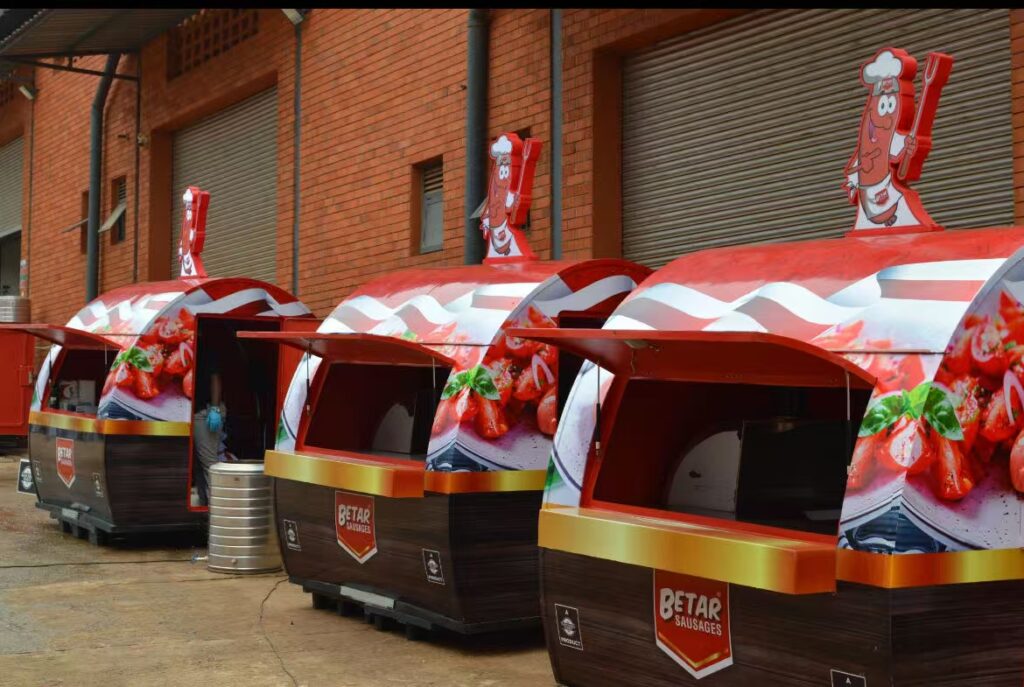
4. One Material Platform, Many Different Brand TouchpointsAnother advantage of our fiberglass product family is that customers do not have to use fiberglass for only one kiosk.The same material language can be extended across multiple brand touchpoints.Imagine a telecom, mobile money, beverage, lottery, or FMCG campaign.A permanent or semi-permanent location might use a fiberglass kiosk.A mobile beverage sales point might use an insulated fiberglass cart.An event activation could use a molded promotional counter.The surrounding street could use molded pole-mounted advertising signs.Pedestrian traffic could be guided by fiberglass A-board poster stands.Suddenly, these are no longer isolated products.They become a coordinated family of branded physical assets.Colors can be aligned.Graphic language can be aligned.Shapes can share similar design DNA.Logos can be positioned consistently.This helps agencies create a much stronger and more recognizable offline brand environment.
5. From a Simple Idea to 3D Modeling — You Don’t Need to Arrive with Engineering DrawingsMany of our customers are brand agencies, distributors or marketing teams.They understand the campaign very well, but they are not necessarily product engineers.That is perfectly fine.A project can begin with something very simple.It might be a hand sketch.A reference photograph.A brand guideline.A PowerPoint page.Or even a sentence such as:“We need a small outdoor kiosk for mobile money agents.”From that point, Flowvisual can help develop the idea into a practical product concept.We consider the application, dimensions, branding, user behavior, material, manufacturing process, transportation and expected order quantity.Then the idea can move into 3D modeling.This stage is particularly important because it allows both sides to see the product before money is committed to physical tooling and sampling.Proportions can be adjusted.Windows can be moved.Logos can be resized.Colors can be compared.Storage areas can be added.The relationship between appearance and manufacturing can be discussed before production begins.In other words, we help turn marketing language into manufacturing language.
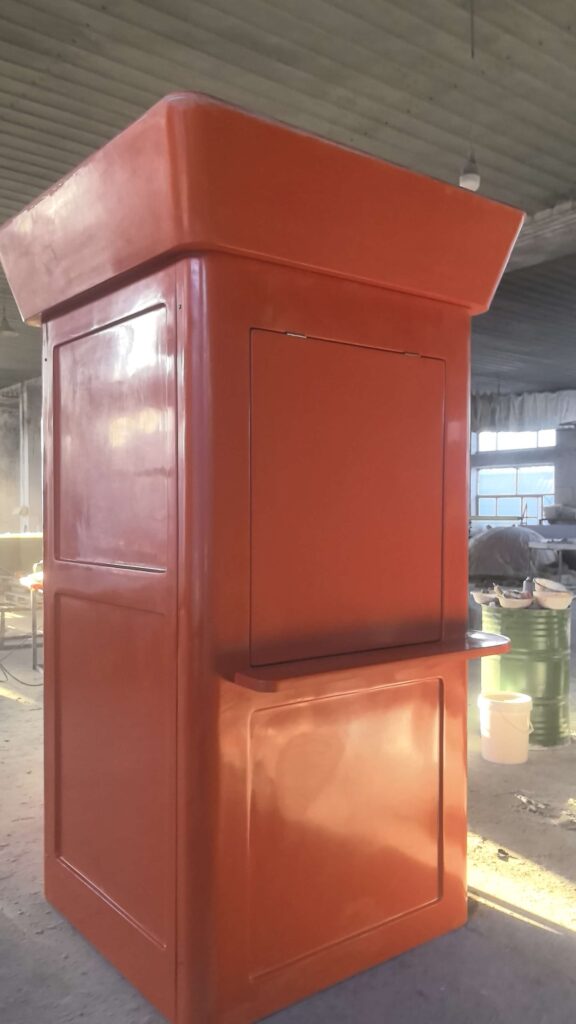
6. From 3D Design to Prototype, and from Prototype to Mass ProductionA beautiful rendering is only the beginning.The next question is:Can we actually manufacture it?This is where Flowvisual’s integrated development process becomes important.Once the concept and 3D model are confirmed, we can move into engineering, tooling, prototype development and physical evaluation.The first sample allows us to check things that are difficult to judge on a computer screen.Is the height comfortable?Does the door open correctly?Is the counter strong enough?Does the cart move smoothly?Does the poster fit properly?Are the molded surfaces clean?Is the color right?Is the product easy to assemble?Can it be packed efficiently?After the prototype is reviewed, necessary improvements can be made before mass production.This reduces the risk of discovering fundamental problems after hundreds of units have already been produced.For our customers, this means they do not need to coordinate separate companies for concept development, 3D modeling, mold development, sample manufacturing and volume production.Flowvisual can support the process as one connected project.That saves both time and management cost.
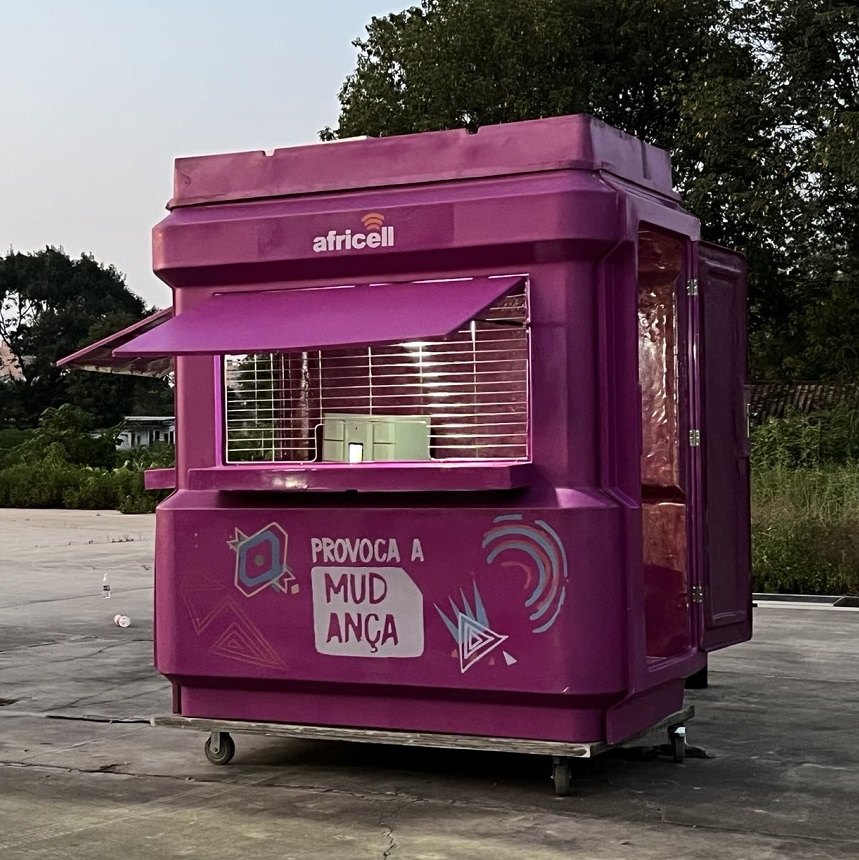
7. Mold Investment Can Become a Long-Term Brand AssetPeople sometimes see mold cost only as an expense.For the right project, we see it differently.A well-developed mold can become a long-term manufacturing asset.Imagine a brand developing a distinctive kiosk and then rolling it out across 200 locations.Next year, another 300 units are required.Later, the same structure is introduced into another country.The original tooling investment is now supporting several rounds of production.As production quantity increases, the mold cost allocated to each individual product becomes smaller.This is one of the reasons fiberglass is particularly attractive for scalable brand programs.The first stage requires more engineering than buying a generic product, but the long-term result can be a unique branded structure that is repeatedly manufactured at a reasonable cost.And if Flowvisual already has an appropriate mold in our existing 30+ SKU library, that initial investment may be reduced even further.
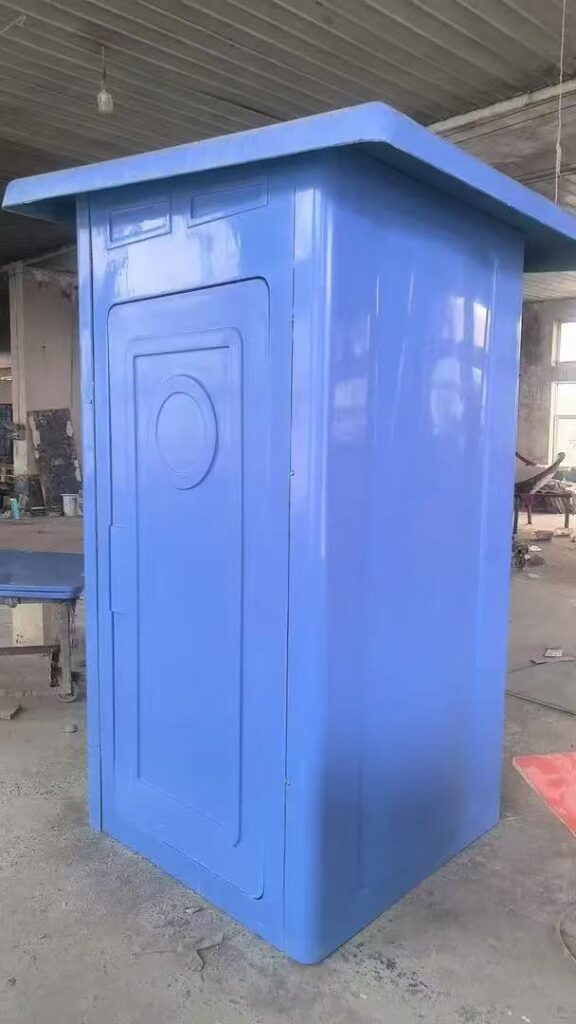
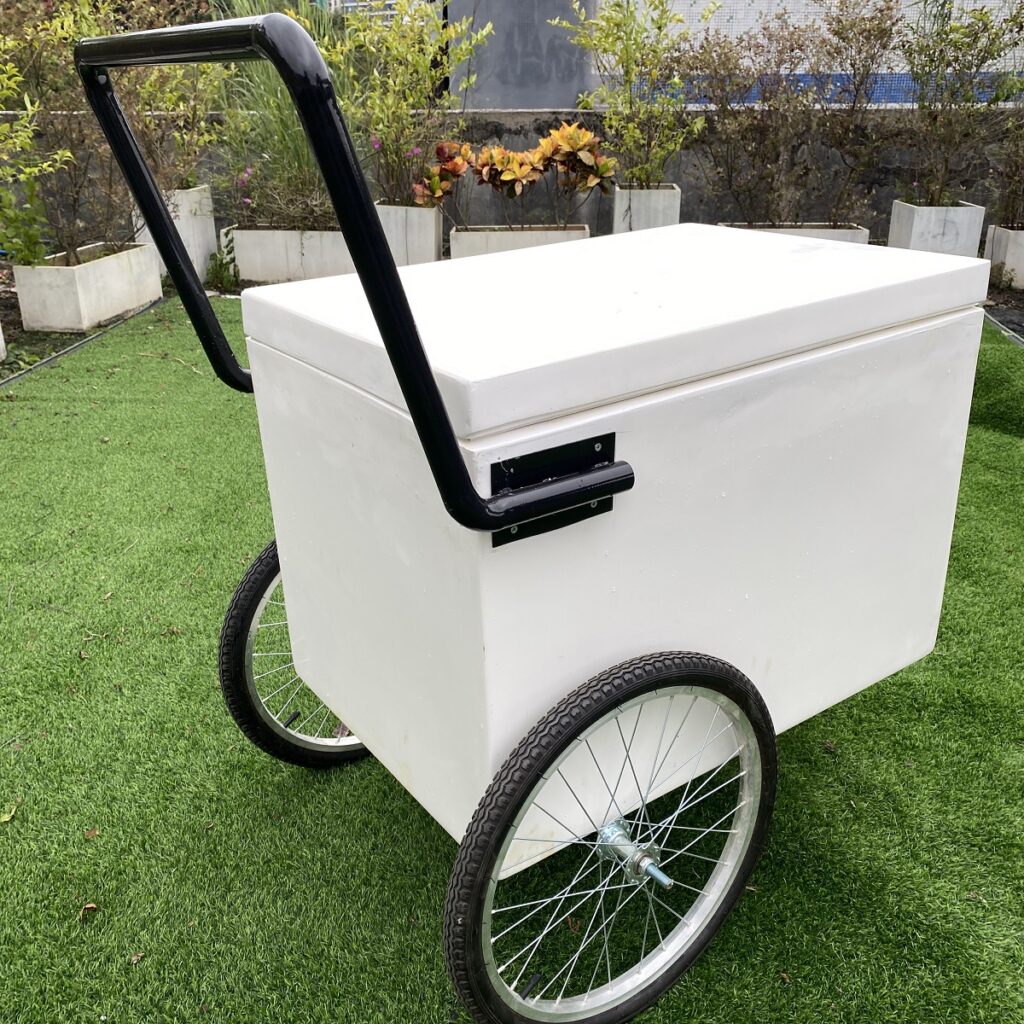
8. Fiberglass Can Combine Appearance, Strength and FunctionFiberglass is not only about making unusual shapes.It can also solve practical functional problems.Take our insulated carts as an example.The outer fiberglass shell provides a durable and visually customizable surface, while an insulated internal construction can be developed to support cold beverage or food applications.For a kiosk, fiberglass can be combined with metal frames, windows, locks, electrical components, LED signage, solar systems or internal furniture.For promotional counters, molded shells can be combined with structural components and branding panels.This hybrid approach is important.At Flowvisual, we do not believe one material should solve every problem.Fiberglass should be used where fiberglass makes sense.Metal should be used where metal makes sense.Acrylic, LED, wood, aluminum and other materials can be integrated when the project requires them.The goal is not to sell a material.The goal is to build the right product.
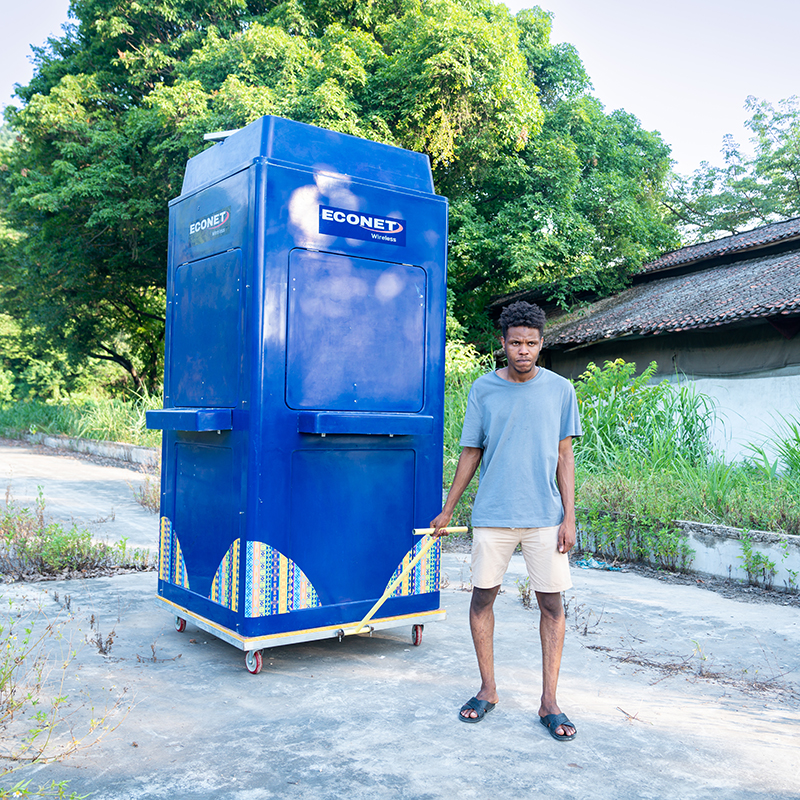
10. Built for Real Logistics, Not Just Beautiful Product PhotosFor global projects, manufacturing is only half of the story.The products still have to travel.A large kiosk that cannot be packed efficiently can become very expensive once international freight is calculated.A beautiful molded component that is easily damaged during container loading is not a good export product.This is why packaging, assembly, stacking and container utilization should be considered during product development — not after production has finished.Flowvisual has years of experience shipping POSM and retail equipment internationally.For export-oriented projects, we can consider whether structures should be modular, whether parts can be nested, whether accessories can be packed inside larger products, and how vulnerable surfaces should be protected.Sometimes, changing a product by only a few centimeters can improve container loading efficiency.For a large project, that can translate into meaningful savings.
11 Years of Development Means Customers Are Buying More Than Manufacturing Capacity
A factory can buy fiberglass materials.
A factory can buy equipment.
But experience takes time.
Over 11 years, Flowvisual has gradually built knowledge around what works and what does not work for branded outdoor POSM.
We have learned from prototypes.
We have learned from production.
We have learned from transportation.
We have learned from different countries and applications.
And we continue developing new products.
This accumulated knowledge is one of the biggest reasons clients come to us.
They are not simply buying fiberglass manufacturing.
They are accessing an existing system of design experience, 30+ developed SKUs, tooling resources, engineering knowledge, supply-chain integration and export experience.
More Than Fiberglass Products — A Platform for Outdoor Brand Activation
Ultimately, this is why Flowvisual manufactures so many different fiberglass kiosks and POSM products.
Fiberglass gives us an excellent material foundation for outdoor brand activation: strong resistance to moisture and corrosion, the ability to achieve durable color systems for demanding outdoor environments, and exceptional freedom of form.
But material alone is not enough.
The bigger advantage comes from combining that material with 11 years of Flowvisual product development.
With more than 30 developed fiberglass-related SKUs, many customers can begin with an existing solution rather than paying for a completely new mold.
When a new product is necessary, we can support the journey from initial concept → 3D modeling → engineering → tooling → prototype → optimization → mass production → packaging and delivery.
For global brand agencies, that means fewer suppliers to coordinate, shorter development cycles, lower project risk and more opportunities to reuse proven solutions.
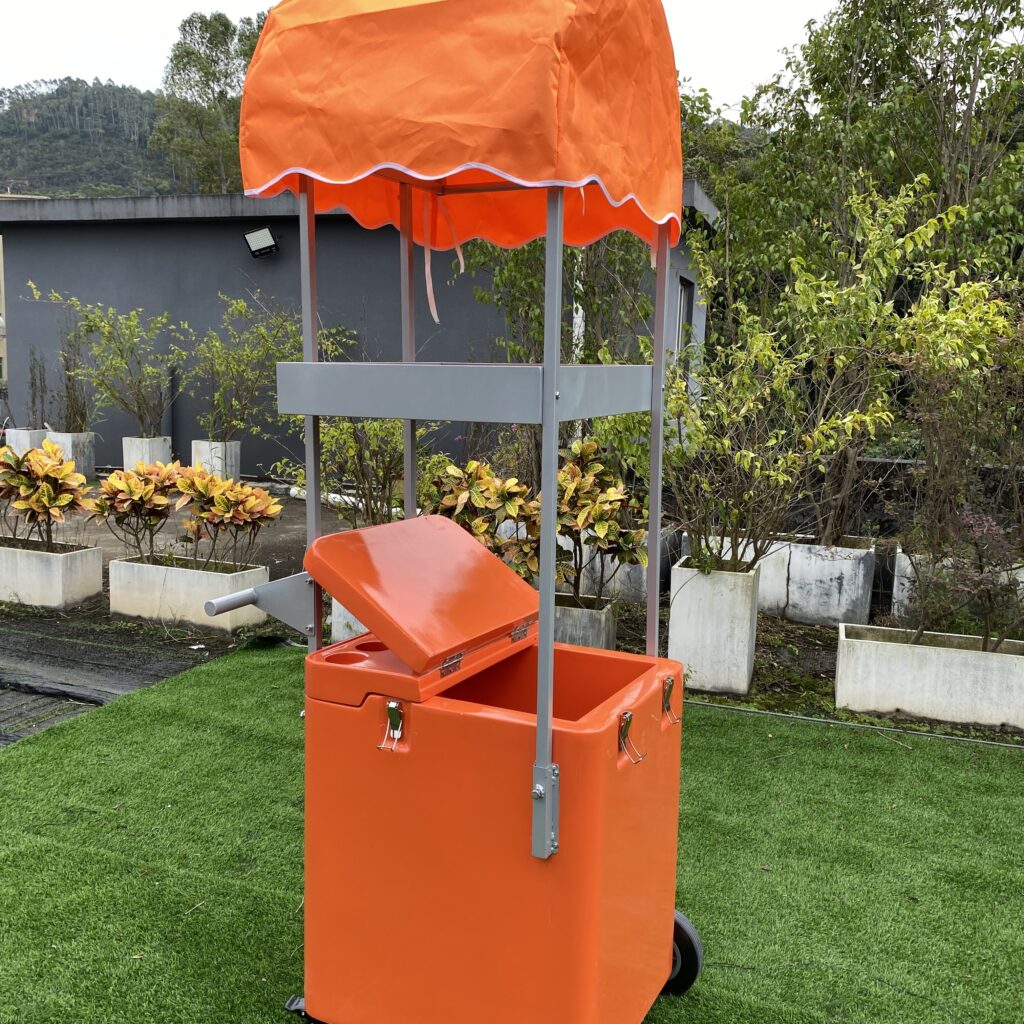
Whether you need a fiberglass kiosk, insulated mobile cart, molded promotional counter, street-light advertising sign, A-board poster stand, or an entirely new customized POSM concept, Flowvisual can help turn your campaign idea into a physical retail product ready for real-world deployment.
Have an outdoor brand activation project in mind?
Send Flowvisual your brand guideline, reference image, rough sketch, target market, expected quantity and application scenario.
You bring the brand and the idea. We help turn it into a durable, scalable and production-ready outdoor POSM solution.